In this post I want to talk a little about my design goals and the thinking behind them. To define those goals, I first had to work out what form and function mean to me.
Function is important
Function seemed obvious. A useful object should do its job well without the user having to adapt to the object’s idiosyncrasies. That’s basic enough — I want to make tools that do what they were designed to do well, almost naturally.
Don’t ignore form
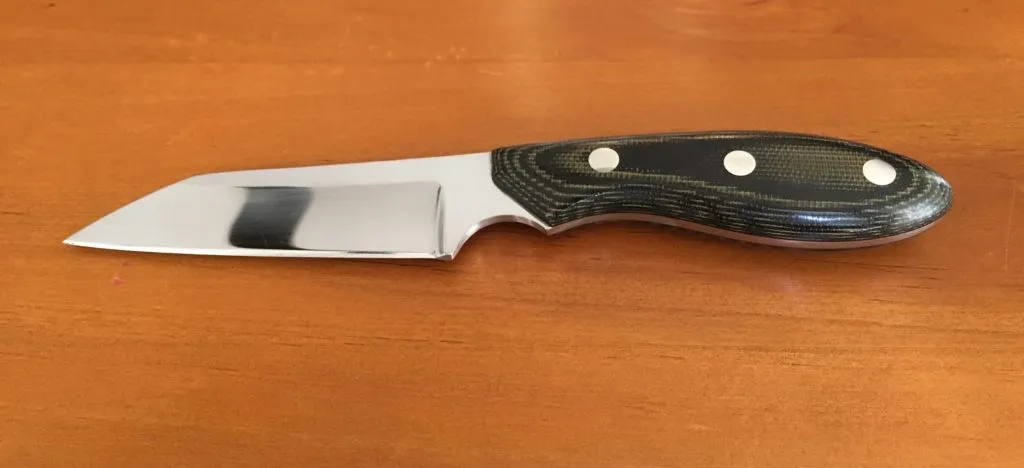
But making knives people want to use every day — knives that do their job so well they become part of the owner’s daily life — means I can’t ignore form. People are full of feelings, and those feelings color how we perceive the value of a thing. Sometimes those perceptions keep us from truly appreciating what’s right in front of us. Rather than fight that, I want to embrace it in my work. Someone should want to reach for one of my knives because it’s excellent at its job, feels good in the hand, and is good to look at — in that order.
The perfect tool for the job
For a knife to be truly useful, it can’t be so beautiful that its owner is afraid to damage it. Don’t misunderstand me: I love some of the beautiful work I’ve seen, and I hope to make pieces like that myself as my skills improve. But my main aim is knives whose beauty rests solidly in both form and function — not so pretty they’d be better off on display than in use as the perfect tool for the job.
Originally published April 5, 2016 on my knifemaking blog; recovered from the Internet Archive and lightly edited.
- knifemaking
- diy
- design